Choosing a new garage door isn’t just about looks. The type of door you choose affects how your garage functions day to day, how much space you have to work with and how well the door handles Sunshine Coast conditions.
Two of the most common options homeowners compare are roller doors and sectional doors. Both have their place, but one will usually make more sense depending on your home, garage layout and how you use the space.
Here’s a clear breakdown to help you decide.
What Is a Roller Door?
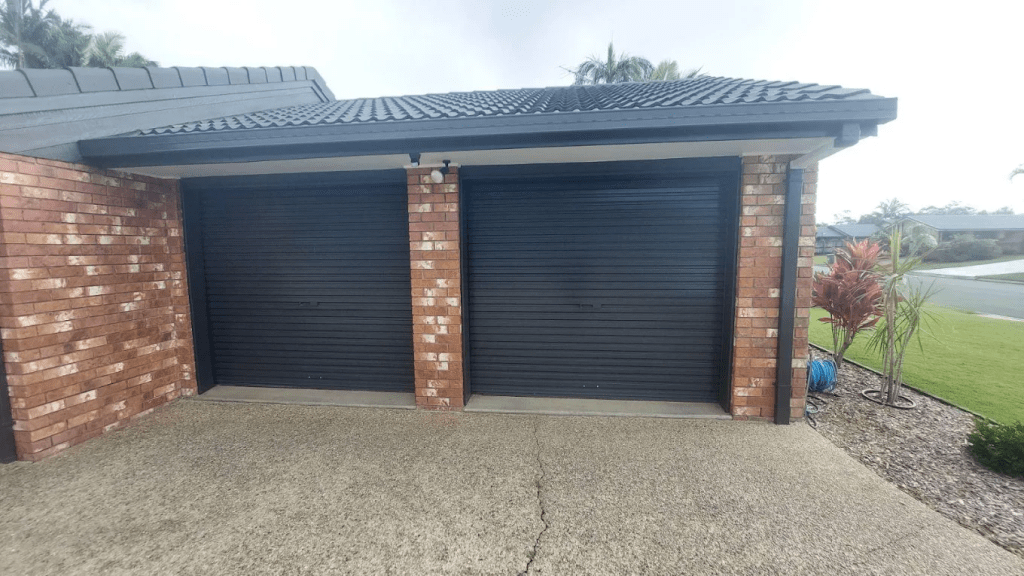
A roller door is made from horizontal slats that roll up into a drum above the garage opening. It’s a simple, compact design that’s been used in Australian homes for decades.
Why homeowners choose roller doors
- They take up very little ceiling space
- They suit garages with limited headroom
- They’re simple and reliable
- They’re often more cost-effective
- They work well for both manual and motorised setups
Roller doors are common on older homes, sheds and garages where internal space is limited or ceiling height is low.
What Is a Sectional Door?
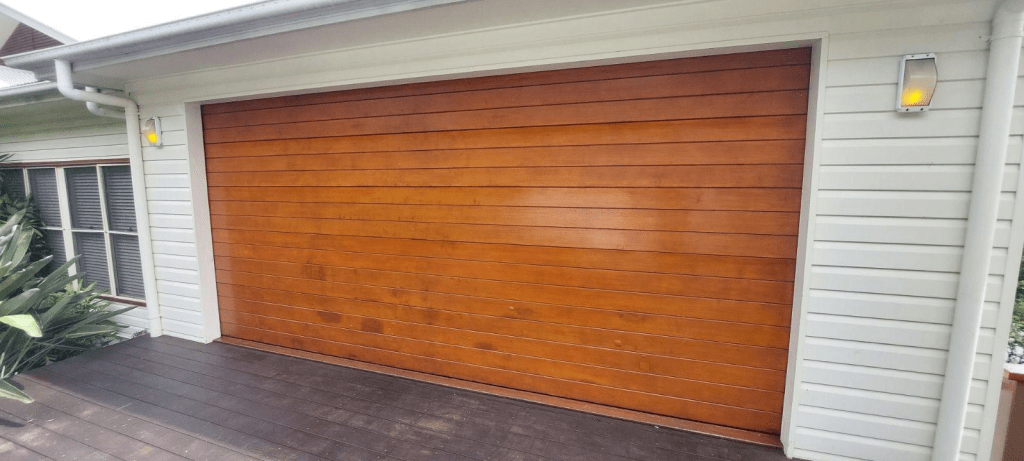
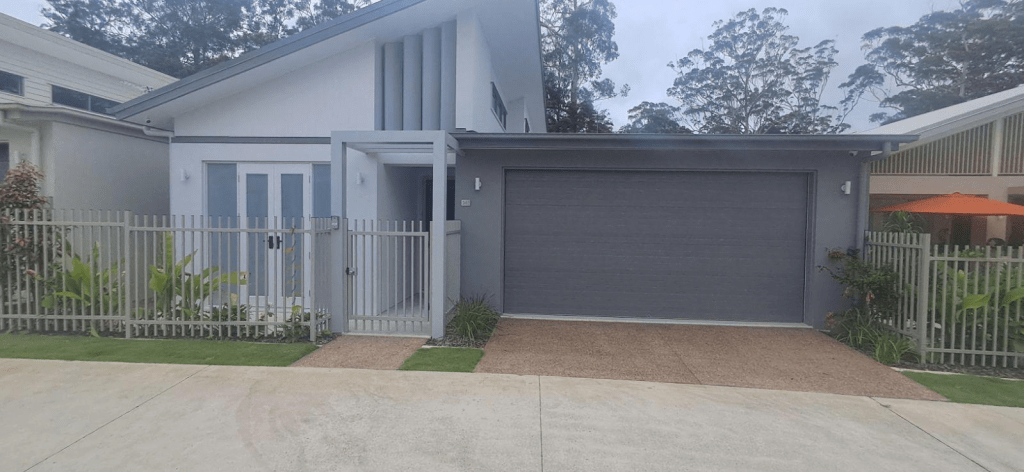
A sectional door is made up of large panels that lift vertically and slide back along tracks under the garage ceiling. These doors are usually paired with a motor and offer a more modern appearance.
Why homeowners choose sectional doors
- Cleaner, more modern look
- Better sealing around the opening
- Quieter operation when installed properly
- More design and colour options
- Works well with modern garage layouts
Sectional doors are popular on newer homes and renovations where appearance and smooth operation are a priority.
Key Differences Between Roller and Sectional Doors
Space Inside the Garage
Roller doors roll into a compact drum, which leaves the ceiling mostly clear. This makes them ideal if you want to install storage racks, lighting or use ceiling space.
Sectional doors sit under the ceiling when open, which means they take up more overhead space but offer better sealing around the opening.
Noise and Smoothness
Sectional doors tend to operate more smoothly and quietly, especially when paired with a quality motor. Roller doors can be noisier over time, particularly in coastal areas where salt and grit affect the slats and tracks.
Weather Sealing and Insulation
Sectional doors generally seal better around the edges, which helps keep out wind, dust and moisture. Insulated sectional doors can also improve temperature control inside the garage.
Roller doors offer basic protection but don’t seal as tightly, especially as they age.
Maintenance in Coastal Conditions
On the Sunshine Coast, salt air and humidity play a big role in wear and tear.
- Roller doors can collect salt and grit between the slats, which may cause stiffness or noise if not serviced regularly.
- Sectional doors have more individual components like hinges and rollers, which also benefit from regular servicing but tend to stay smoother when maintained properly.
Appearance and Street Appeal
If street appeal matters, sectional doors usually offer more flexibility. They come in a wider range of finishes, colours and panel designs that suit modern homes.
Roller doors are simpler in appearance but still practical and effective for many properties.
Which One Makes More Sense for Sunshine Coast Homes?
There’s no single “right” answer, it depends on the home.
A roller door often makes more sense if:
- your garage has limited ceiling height
- you need to maximise internal space
- you want a practical, cost-effective solution
- the garage is used mainly for storage or parking
A sectional door usually makes more sense if:
- appearance and street appeal are important
- you want quieter, smoother operation
- better sealing and insulation matter
- the garage is used frequently as an entry point
Getting the Right Advice Before You Decide
The best way to choose between a roller door and a sectional door is to look at the garage itself, not just the door style. Ceiling height, headroom, usage, exposure to coastal conditions and the condition of the opening all play a role.
At Pioneer Garage Doors, we help Sunshine Coast homeowners choose the option that actually suits their garage and how they use it, rather than forcing a one-size-fits-all solution.